Temple of UMI is a Christ concious-mystical and earth-honoring religious community devoted to healing, spiritual transformation, and the restoration of right relationship with the infinite Creator, ourselves, one another, our ancestors, and all Creation.
“UMI” signifies life, nurturance, maternal wisdom, and our return to the Divine Source from whom all life proceeds. We understand God through many sacred names, including Creator, Great Spirit, Divine Source, Father-Mother God, Holy Spirit, The Infinite, Source of Light and Divine Love. These names express different aspects of the same eternal Divine Reality.
Temple of UMI welcomes sincere seekers from diverse racial, cultural, and religious backgrounds. We do not condemn, coerce, convert and do not require every member to use identical language for God. We are united by our commitment to direct communion with the Divine, the healing of the whole person, and the embodiment of love, truth, humility, justice, compassion, fairness and sacred responsibility.
Our beliefs are not adopted for legal convenience. They arise from the lived faith, spiritual experiences, inherited traditions, ministerial formation, ceremonies, teachings, and religious practices of Temple of UMI and its members.
We believe that all life originates in God and that Divine Spirit is present throughout Creation. Human beings, plants, animals, water, earth, air, and the cosmos exist within an interconnected sacred reality.
Although we distinguish between the Creator and Creation, we believe Creation bears the presence, wisdom, and imprint of its Creator. For this reason, the Earth is not merely a collection of resources to be consumed. It is sacred ground entrusted to humanity’s care.
We are called to practice gratitude, stewardship, moderation, reciprocity, and respect. We should not take from the Earth without giving back, nor consume what we are unwilling to protect and restore.
Temple of UMI believes in the life, teachings, spirit, and transforming consciousness revealed through Jesus Christ.
By “Christ consciousness,” we mean the awakening of the human mind and heart to the indwelling presence of God and the gradual formation within us of the mind, character, compassion, courage, and love demonstrated by Christ.
Christ consciousness does not mean that a person becomes Jesus Christ or is elevated above others. It means surrendering the ego-centered self so that the Spirit of Christ may increasingly govern our thoughts, choices, relationships, and conduct.
Scripture teaches:
“Be ye transformed by the renewing of your mind.”
We believe this renewing of the mind is a sacred and continuing process. It requires prayer, contemplation, truth-telling, repentance, forgiveness, self-examination, spiritual discipline, sacred ceremony, and changed conduct.
Mental agreement with spiritual principles is not, by itself, transformation. A belief that never affects behavior remains incomplete. The renewed mind must become visible through a renewed life.
Therefore, we teach:
Temple of UMI believes that spiritual transformation involves the mind, body, emotions, relationships, and spirit. Human beings cannot become whole by suppressing emotional wounds, denying harmful behavior, or professing beliefs they consistently refuse to practice.
The renewal of the mind is incomplete when our stated beliefs remain contradicted by our habitual conduct. A person cannot sincerely proclaim love while continually practicing hatred, claim humility while being governed by pride, or speak of unity while nourishing prejudice and division.
We do not teach that spiritual maturity requires human perfection. We teach that it requires honesty, accountability, willingness, and sustained practice. A spiritually mature person is not someone who never fails, but someone who is willing to recognize harm, accept correction, make amends, and return to right relationship.
Transformation requires us to examine and renounce the patterns that keep us separated from Divine Love, including:
Renunciation does not mean pretending that pain or injustice never occurred. It means refusing to allow the injury to become our permanent identity or to dictate the character of our future.
We believe that no person can become fully free while remaining imprisoned by shame, resentment, hatred, or self-condemnation.
Self-forgiveness is essential to spiritual wholeness. It does not erase responsibility, excuse misconduct, or eliminate the need to repair harm. Self-forgiveness allows a person to acknowledge the truth, accept Divine mercy, make amends where possible, learn from the experience, and live differently.
Likewise, forgiveness of others does not require denying abuse, reconciling with unsafe people, surrendering healthy boundaries, or abandoning the pursuit of justice. Forgiveness is the spiritual release of the demand that hatred must remain in our hearts for justice to be honored.
We distinguish forgiveness from avoidance. Genuine forgiveness may include grief, truth-telling, accountability, restitution, boundaries, and separation from harmful relationships.
We believe that justice and mercy are not enemies. Both are expressions of Divine Love when practiced with wisdom.
Temple of UMI teaches that spiritual gifts must be rooted in spiritual character.
The principal measure of spiritual development is not a person’s title, charisma, visions, revelations, psychic experiences, ceremonial authority, or ability to attract followers. The measure is the fruit produced by the person’s life.
Scripture identifies the Fruits of the Spirit as:
“Love, joy, peace, patience, gentleness, goodness, faith, meekness, temperance.”
We understand these fruits to include:
We believe the capacity to receive, discern, and responsibly exercise spiritual gifts grows from the sincere practice of these fruits. Gifts without character can become instruments of ego, exploitation, manipulation, or spiritual harm.
For this reason, Temple of UMI does not separate spiritual power from ethical responsibility. The deeper the spiritual calling, the greater the obligation to practice humility, honesty, restraint, accountability, and service.
Temple of UMI sincerely believes that Ayahuasca is a sacred sacrament, spiritual medicine, and plant teacher provided through Creation to assist humanity in direct communion with the Divine.
Ayahuasca is not treated by the Temple as a recreational drug, commercial commodity, intoxicating entertainment, or means of escape. Its religious significance cannot be reduced to its chemical constituents or its effects upon the physical brain.
Within our faith, Ayahuasca is received in prayerful ceremony as a means through which the Holy Spirit may illuminate the inner life, reveal hidden wounds, soften the ego, restore the relationship between heart and mind, and call the participant toward repentance, forgiveness, reconciliation, and transformation.
We believe the sacrament may help participants:
The sacrament does not complete a person’s transformation by itself. It may reveal what must be healed, surrendered, forgiven, or changed, but the participant remains responsible for integrating that revelation into daily behavior.
For Temple of UMI, Ayahuasca ceremony and spiritual integration belong together. Revelation without integration can become another form of spiritual avoidance.
The ceremonial reception of Ayahuasca is an essential exercise of Temple of UMI’s religion for members who are spiritually called, medically eligible, properly prepared, and approved to participate.
Not every Temple member is required to consume the sacrament. Some members may participate in the religious community through prayer, study, service, meditation, integration, worship, and non-consuming ceremonial roles.
However, for members called to receive Ayahuasca, the sacrament is central rather than incidental. Its religious role cannot be fully replaced by ordinary counseling, secular meditation, travel to another country, or participation in a different religious organization. These activities may be helpful, but they are not spiritually equivalent to receiving Temple of UMI’s sacrament within the member’s own faith community, under its prayers, teachings, safeguards, and authorized spiritual leadership.
The Temple believes that direct sacramental communion with the Divine is part of its religious exercise and cannot be separated from the community, preparation, ceremony, spiritual covering, and integration that give the sacrament its religious meaning.
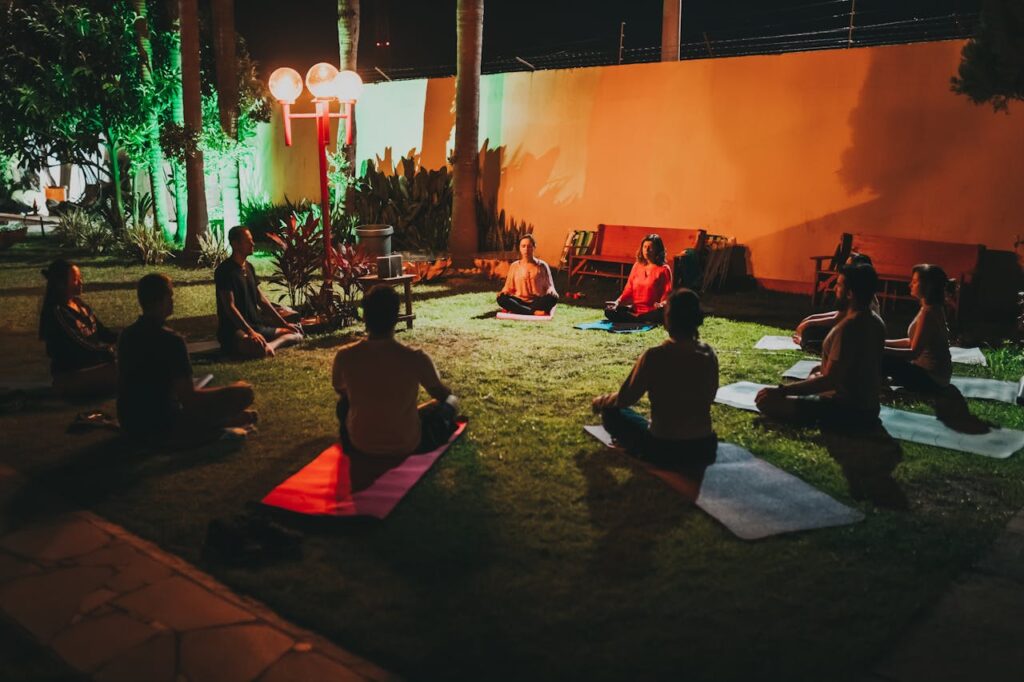
Temple of UMI’s Ayahuasca ceremonies are acts of worship. They ordinarily include prayer, sacred music, meditation, cleansing, anointing, invocation, silence, spiritual instruction, confession or release, communal care, and post-ceremony integration.
Ceremonial space is consecrated as sacred ground. The Earth is our greater temple, and any location in which we sincerely gather for Divine communion may be prayerfully sanctified for worship.
Ayahuasca is consumed only within an authorized religious ceremony. Temple of UMI does not authorize retail sales, casual consumption, recreational use, unsupervised take-home use, or distribution outside its religious purposes and governance.
Only trained and authorized spiritual leaders may possess, prepare, administer, transport, or safeguard the sacrament on behalf of the Temple.
Because the sacrament is sacred and powerful, participation requires preparation. Temple of UMI may require:
Eligibility to participate is determined individually. Membership alone does not create an automatic right to consume the sacrament.
The Temple may decline, postpone, or condition participation when spiritual leadership or qualified health personnel determine that receiving the sacrament would be unsafe or inconsistent with the Temple’s religious standards.
Prayer is central to all Temple of UMI practices. We pray not only to receive what we desire but to become capable of receiving, discerning, and stewarding what Divine Love entrusts to us.
Meditation teaches us to observe the mind without being ruled by every thought. Sacred study helps members examine inherited beliefs and distinguish Divine truth from fear, social conditioning, religious trauma, prejudice, and ego.
Integration is the disciplined process of translating spiritual insight into daily conduct. After ceremony, members may be called to practice forgiveness, make amends, seek counseling, establish boundaries, change harmful habits, improve relationships, serve the community, care for the body, or deepen their prayer practice.
We believe that an authentic encounter with the Divine should gradually become visible in the way a person lives.
Temple of UMI does not believe in coercive proselytizing. Those who seek our community must come voluntarily and sincerely.
Membership is a sacred relationship rather than a method of obtaining access to Ayahuasca. Members are expected to participate in the broader life of the Temple through prayer, religious study, spiritual formation, service, financial or material support according to ability, community responsibility, and adherence to Temple teachings and ethical standards.
The Temple may establish different categories of participation, including members who receive the sacrament, members who attend without consuming it, ceremonial assistants, integration participants, clergy, and authorized sacramental leaders.
Members who participate in Ayahuasca ceremonies must satisfy the Temple’s screening, preparation, and safety requirements for each ceremony.
Temple leaders are servants and stewards, not owners of Divine truth. Spiritual authority exists to protect the sacrament, preserve the integrity of ceremony, teach the faith, care for members, and serve the community.
No leader is above ethical accountability. Spiritual gifts, ceremonial knowledge, or religious titles do not authorize manipulation, exploitation, discrimination, sexual misconduct, financial abuse, retaliation, or misuse of the sacrament.
Those entrusted with the sacrament bear a heightened duty to safeguard it from diversion, misuse, contamination, unauthorized access, and nonreligious distribution.
Temple of UMI affirms that its beliefs, worship, sacramental ceremonies, spiritual preparation, religious instruction, community gathering, possession and administration of its sacrament, and integration practices constitute exercises of religion.
The Religious Freedom Restoration Act provides that the federal government may not substantially burden a person’s exercise of religion—even through a generally applicable rule—unless the government demonstrates that applying that burden to the particular religious claimant furthers a compelling governmental interest and is the least restrictive means of doing so. See 42 U.S.C. § 2000bb-1.
Temple of UMI recognizes legitimate governmental interests in public health, safety, prevention of diversion, and responsible sacramental stewardship. We believe those interests can and should be addressed through careful screening, controlled storage, recordkeeping, trained supervision, restricted ceremonial use, membership requirements, ethical governance, and other measures that protect safety without destroying the religious exercise itself.
Our invocation of RFRA is not a request for unrestricted access to a controlled substance or exemption from responsible oversight. It is an affirmation that the federal government must consider Temple of UMI’s actual religious practices and determine whether its interests can be achieved through means less restrictive than prohibition, seizure, criminal prosecution, or the effective elimination of the sacramental practice.
As members of Temple of UMI, we covenant to pursue transformation rather than spiritual appearance.
We seek:
We accept that sacred ceremony may reveal the path, but we must choose to walk it.
We accept that the sacrament may open the door, but we must practice the truth revealed through it.
We accept that spiritual freedom requires the release of resentment, envy, jealousy, hatred, prejudice, pride, self-centeredness, and self-condemnation.
We believe that as the mind is renewed, the heart purified, the ego humbled, and conduct brought into alignment with Divine Love, the Christ consciousness becomes increasingly embodied within us.
This is our path toward wholeness.
This is our practice of the Fruits of the Spirit.
This is our sacred work.
This is the religious faith and sincere spiritual exercise of Temple of UMI.
©2026 by Temple of Umi Sacred Healing Ayahuasca Retreats.